
Safe Sleep
Crib Bumper vs. Breathable Mesh: What’s Best for Your Baby?

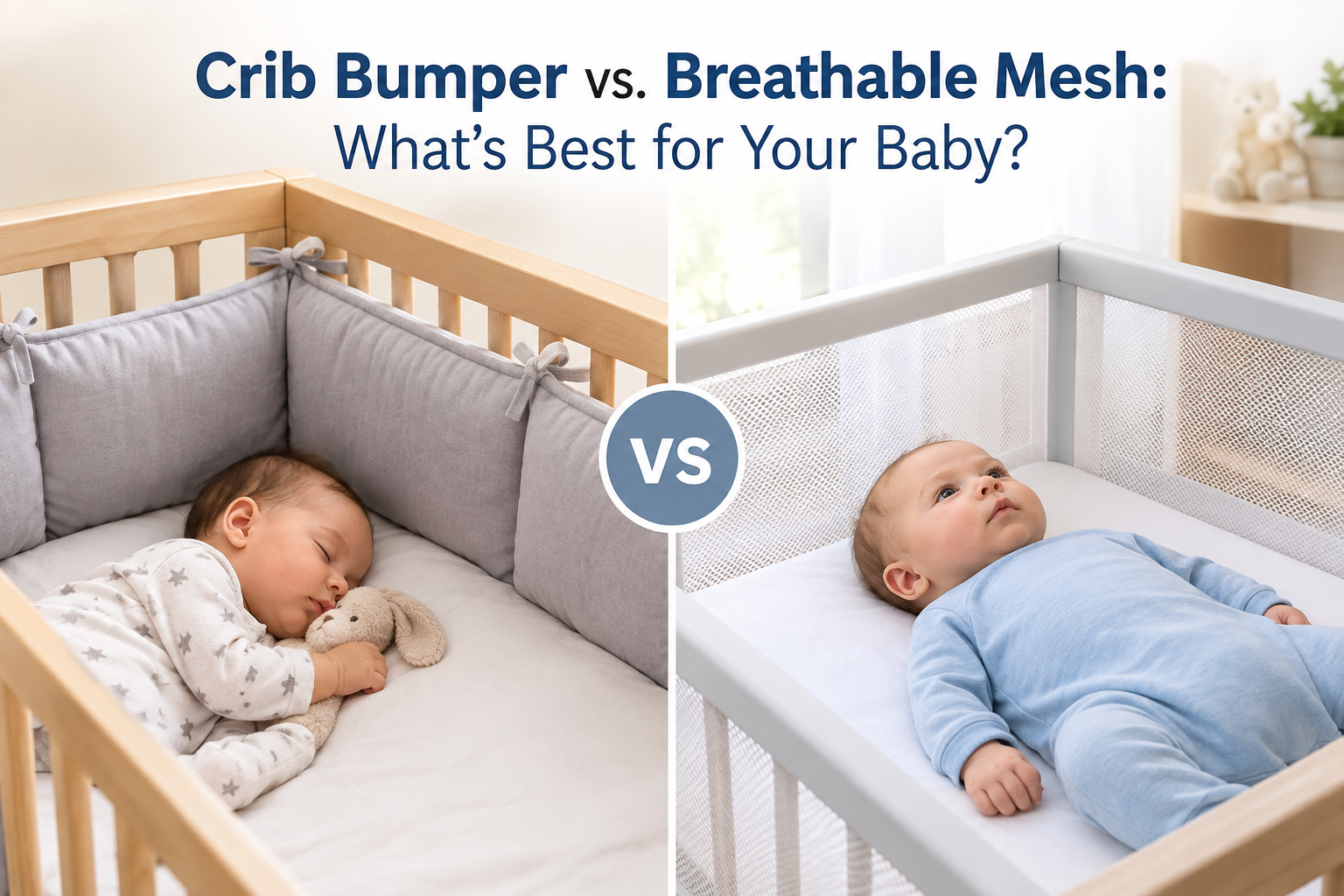
Choosing the right bedding for your baby is an important part of preparing a safe and comfortable nursery. When comparing crib bumper vs. breathable mesh, many parents wonder whether padded crib bumpers or mesh liners offer better protection against bumps, trapped arms, and legs getting stuck between crib slats. Both products are designed to cover the sides of a crib, but their materials, construction, and potential risks are different.
Although traditional crib bumper and breathable mesh liners are often marketed as nursery essentials, current pediatric safe-sleep guidance recommends keeping both out of your baby’s sleeping area. Soft bedding and crib accessories can create hazards that outweigh their perceived benefits. Understanding the differences between these products, the safety concerns associated with them, and the alternatives available can help parents make informed decisions about their baby’s sleep environment.
Understanding Crib Bumpers and Breathable Mesh
Traditional crib bumper are padded fabric cushions that attach to the inside of a baby’s crib. They were originally designed to prevent babies from bumping their heads against wooden or metal crib slats and to stop their arms and legs from slipping between the bars. They are commonly made from cotton, polyester, foam, or other soft materials and are often sold as part of matching nursery bedding sets.

Breathable mesh liners are made from lightweight, net-like fabric designed to allow air to pass through the material. They are generally thinner than traditional padded bumpers and are marketed as a way to reduce the risk of a baby’s face pressing against a solid surface. Although their open-weave construction may seem safer, breathable mesh liners still introduce fabric and potential entanglement or entrapment hazards into the crib. Their name does not establish that they are safe for infant sleep.
Crib Bumper vs. Breathable Mesh: Key Differences
Traditional crib bumper and breathable mesh liners differ in thickness, material, airflow, and construction. Padded bumpers typically contain cushioning that creates a soft barrier around the inside of the crib, while mesh liners use thinner, porous fabric. Both are designed to attach to the crib rails, but the presence of either product introduces an additional object into the baby’s sleeping space.
The following comparison describes their design, not a safety endorsement.
|
Feature |
Traditional crib bumper |
Breathable mesh liner |
|---|---|---|
|
Material |
Padded fabric and foam |
Thin, woven mesh |
|
Thickness |
Thick and cushioned |
Thin and flexible |
|
Airflow |
Generally limited |
Allows more airflow through fabric |
|
Main purpose |
Cushioning against crib rails |
Covering crib slats |
|
Potential hazards |
Suffocation, entrapment, strangulation |
Entanglement, entrapment, strangulation |
|
Recommended for infant sleep |
No |
No |
|
Safer alternative |
Bare crib with fitted sheet |
Bare crib with fitted sheet |
Despite their differences, neither product is recommended for routine infant sleep by the American Academy of Pediatrics (AAP). The safest option is to leave the crib free of bumpers, liners, pillows, blankets, and other soft accessories.
Safety Risks of Traditional Crib Bumpers
Traditional crib bumpers can create several hazards for babies, particularly during the first year of life. A baby may roll face-first against the padding, potentially restricting airflow. The bumper’s ties or loose sections may also create strangulation or entanglement risks, while gaps between the bumper and mattress can create spaces where a baby may become trapped.
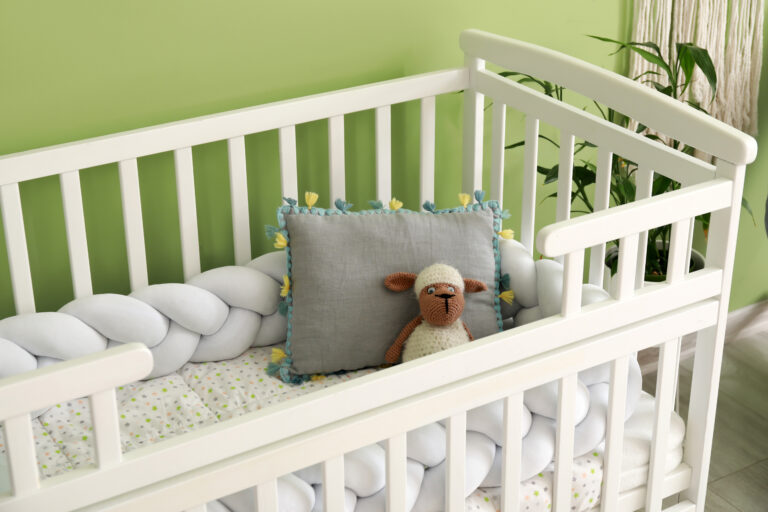
There is also no convincing evidence that crib bumpers prevent serious injuries from contact with crib rails. As babies grow, they may use thick bumpers as a step to climb over the crib sides, creating a risk of falling. The AAP advises parents to keep padded bumpers out of cribs because the potential hazards outweigh their unproven benefits.
Are Breathable Mesh Liners Safer for Babies?
Breathable mesh liners are often promoted as a less bulky alternative to traditional crib bumpers. Their lightweight construction allows more air to pass through the material, which may give parents reassurance about airflow. They are also designed to reduce direct contact with crib slats and may appear to offer a practical solution for babies who move frequently during sleep.
However, allowing air to pass through fabric does not eliminate the other risks associated with placing liners inside a crib. Mesh can loosen, become displaced, or create opportunities for entanglement and entrapment. There is insufficient evidence to establish that breathable mesh liners prevent sleep-related injuries or deaths. Pediatric safe-sleep guidance therefore recommends keeping them out of the crib, even when they are marketed as breathable or safer alternatives.
What Experts Recommend for Safe Baby Sleep
The AAP recommends creating a simple sleep environment that minimises potential hazards. Babies should be placed on their backs for every sleep on a firm, flat, non-inclined mattress in a safety-compliant crib, bassinet, or play yard. The mattress should have a tightly fitted sheet, with no additional bedding or accessories.

Parents should also keep pillows, stuffed toys, quilts, loose blankets, and crib bumpers out of the sleeping area. Room-sharing without bed-sharing is recommended, ideally for at least the first six months. These precautions help reduce the risk of sleep-related infant deaths, including suffocation and strangulation.
Safer Alternatives to Crib Bumpers and Mesh Liners
The safest alternative to both traditional bumpers and breathable mesh liners is a bare crib with a firm mattress and a fitted sheet. Modern cribs are designed to meet safety requirements for slat spacing, reducing the need for products intended to prevent a baby’s limbs from passing between the bars. Parents do not need to add padding to create a safe sleep environment.
If you are concerned about your baby feeling cold, consider using appropriately sized, non-weighted sleep clothing or a wearable blanket designed for infants. These options can provide warmth without adding loose bedding to the crib. Always ensure that your baby’s head and face remain uncovered during sleep and avoid overdressing to prevent overheating.
How to Choose a Safe Crib for Your Baby
Selecting a suitable crib is more important than purchasing additional bedding accessories. Look for a sturdy crib that meets applicable safety standards in your country, has secure hardware, and features properly spaced slats. The mattress should fit snugly without large gaps around the edges, and the crib should be free from broken components, sharp edges, or protruding parts.
Parents purchasing a second-hand crib should inspect it carefully for damage, missing hardware, and product recalls. Avoid older drop-side cribs and products that do not meet current safety requirements. Checking the manufacturer’s instructions and following the recommended mattress height as your baby grows can also help maintain a safer sleeping environment.
Common Myths About Crib Bumpers and Mesh Liners
One common misconception is that breathable mesh liners are completely safe because air can pass through their fabric. Although mesh allows greater airflow than solid padding, this does not eliminate the risks of entanglement, entrapment, or other hazards associated with attaching fabric to crib rails. Similarly, the belief that padded bumpers prevent serious injuries from crib slats is not supported by convincing evidence.
Another misconception is that babies need bumpers once they begin rolling, moving around, or getting their legs caught between crib slats. Modern safety-compliant cribs are designed with appropriate slat spacing, and babies generally do not need additional barriers. If you are concerned about unusual movement, discomfort, or repeated injuries, discuss the issue with your pediatrician rather than adding crib accessories.
Creating a Comfortable and Safe Nursery
A comfortable nursery does not need elaborate bedding or decorative crib accessories. A well-ventilated room, a suitable sleeping temperature, and comfortable infant sleepwear can help create a pleasant environment. Keeping the crib away from windows, cords, heaters, and other potential hazards also contributes to a safer nursery.
Parents can still personalise their baby’s room through wall decorations, curtains, rugs, and furniture positioned safely outside the crib. For warmth, a properly fitted wearable blanket can be used instead of loose bedding. Prioritising a simple sleeping space allows parents to focus on their baby’s comfort without introducing unnecessary objects into the crib.

-
 Fashion1 week ago
Blazertje: Complete Style Guide for Every Occasion and Season
-

 Culture4 weeks ago
Anheihe: A Hidden Beautiful Place in Modern Culture and History
-

 Technology4 days ago
Weakspurn.com: A Safety Guide Protecting Yourself on Unknown Sites
-

 Technology2 weeks ago
Inurl:megazee.com: What Users Are Saying About the New Digital Platform
-

 Entertainment1 month ago
What Is CricFooty? The Ultimate Hub for Live Sports Updates
-

 Health1 month ago
Sosoactive Co: Finding the Perfect Fit for Your Training Routine
-

 History1 week ago
Cumhuritey: The History and Evolution of Turkey’s Iconic Daily
-

 Business4 weeks ago
Kársperski: The Journey of a Digital Security Pioneer
-

 Technology1 week ago
Nelonium: The Future of Energy Solutions Technology
-

 Entertainment4 weeks ago
Babybelletje: A Journey into Dutch Childhood Memories
-

 Science4 weeks ago
Cyanová: The Fascinating Science Behind This Unique Color
-

 Technology4 weeks ago
Nebs6ak: How can it Transforming Industries One Step at a Time